
01
Liquid → lyophilized conversion
Reformulating a wet reagent into a stable freeze-dried format — excipient and cryoprotectant selection matched to your enzyme or conjugate chemistry.
Diagnostic reagent lyophilization services for teams across Canada — freeze-dried enzymes, oligos, and detection reagents for IVD kits and lateral-flow assays. We take the reagent from cycle development to pilot vial batches, documented to transfer cleanly to your next manufacturer.
Diagnostic assay developers rely on lyophilization to protect sensitive reagents from hydrolysis, temperature excursions, and cold-chain logistics. A freeze-dried reagent ships at ambient temperature, reconstitutes in one step, and holds its performance across a long shelf life.
But a diagnostic reagent is unforgiving: a collapsed cake, a cycle that denatures an enzyme, or reconstitution that drifts lot-to-lot all show up as assay failures — usually long after the batch is made. We develop freeze-drying approaches that preserve analytical performance from the first feasibility run onward.
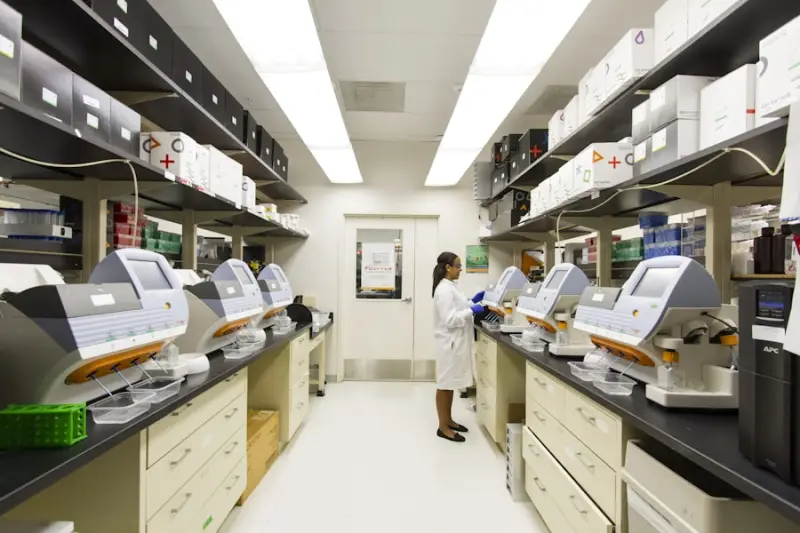
Reformulating a wet reagent into a stable freeze-dried format — excipient and cryoprotectant selection matched to your enzyme or conjugate chemistry.
Locking a cycle that produces a uniform cake and dissolves the same way every time — the line between a passing and failing assay.
Vial batches sized for verification, validation studies, and early commercial supply — without a large CDMO's minimums.
Each stage is signed off before the next begins, so you always know what's locked and what the next manufacturer will receive.
We review your material, target format, and requirements, then say plainly whether we're a fit.
Cryoprotectant screening and thermal characterization so the product holds through drying and storage.
A reproducible cycle built around your formulation, verified against your acceptance targets.
Documented pilot production in glass vials, with batch records structured for technology transfer.
Most freeze-drying services will run whatever cycle you hand them. We start with the reagent formulation, because fixing a mismatch there costs a fraction of finding it at reconstitution.
If your question isn't here, send it — we'll answer before a first call.
Yes. Glycerol interferes with freeze-drying, so much of reagent lyophilization is reformulating into glycerol-free, lyo-compatible chemistry that still protects enzyme activity through the cycle and on reconstitution.
That's a common target. Once formulation and cycle are locked, complete master-mix components can be freeze-dried together in one vial so the end user just reconstitutes and runs.
We focus on pilot-scale vial lyophilization — the step between benchtop development and commercial manufacturing. Tell us your target batch size and we'll confirm fit on the first call.
We operate quality-minded, documented workflows suited to diagnostic development. If your project needs a specific GMP tier beyond our scope, we'll say so plainly and structure documentation to transfer cleanly to a GMP manufacturer.
That's the point of developing it formulation-first and documenting every parameter. We build the cycle to hold when it moves to your line or a larger manufacturer.
Share your formulation, target format, and assay requirements. Our Kanata team will tell you plainly whether freeze-drying is the right path — and map the next step.
Request a Feasibility Quote →